


Top 26 Dubai Interior Design Trends in 2026

Dubai interiors in 2026 are moving toward “experience-first” homes: warmer minimalism, stronger material presence, wellness features, and smart automation that stays visually quiet. These directions show up across luxury villas, apartments, and hospitality-led residences.
If you’re planning a fit-out or upgrade with an interior contracting company in dubai, the trends below help you brief interior contractors dubai and any interior design and renovation company or interior renovation company with clear, buildable outcomes.
1) Warm minimalism (less clutter, more texture)

Minimal layouts stay, but the look shifts warmer: layered textiles, soft neutrals, and tactile finishes instead of flat white-on-white.
2) Quiet luxury (quality-over-quantity)

Subtle premium materials—walnut, honed stone, bronze details—without heavy ornament.
3) Curves and soft geometry

Rounded sofas, arched niches, and curved joinery to reduce sharp visual lines while keeping layouts clean.
4) Biophilic design scaled for the Gulf climate

Indoor planting, shaded terraces, natural textures, and daylight optimization—often with low-maintenance plant selection.
5) Smart home integration that disappears

Automation is expected (lighting, AC, blinds, security), but hardware is hidden: flush keypads, concealed sensors, clean ceiling lines.
6) “Wellness corners” (home spa logic)
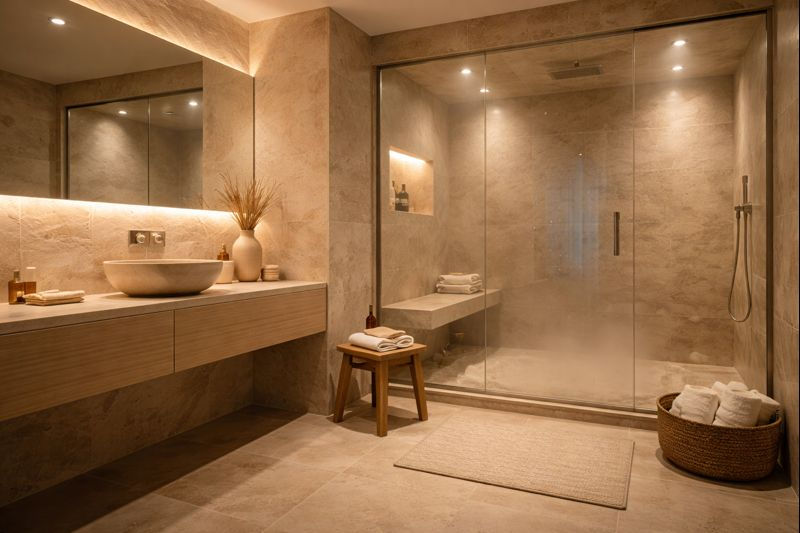
Spaces for recovery and calm: steam shower looks, aromatherapy-ready bathrooms, circadian lighting, acoustics, and low-glare materials.
7) Microcement and seamless surfaces

Continuous floors/walls in wet areas and living zones for a monolithic look (requires correct substrate prep and expansion detailing).
8) Statement stone (but calmer veining)

Large-format stone on islands, feature walls, and bathroom vanities—often honed/matte instead of glossy.
9) Layered lighting (architectural + decorative)

More zones: cove lighting, wall grazers, toe-kick LEDs, and adjustable task lighting—planned early with MEP coordination.
10) Textured walls (plaster, limewash, ribbed panels)
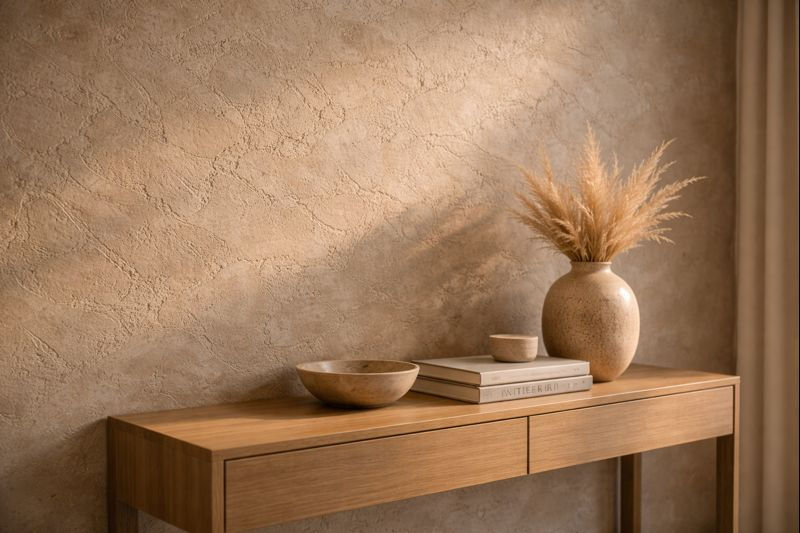
Handmade-looking walls are back because they add depth without adding objects.
11) Muted metals over mirror shine

Brushed brass, antique bronze, and satin stainless replace high-gloss chrome for a softer finish.
12) Built-in joinery as architecture (not furniture)
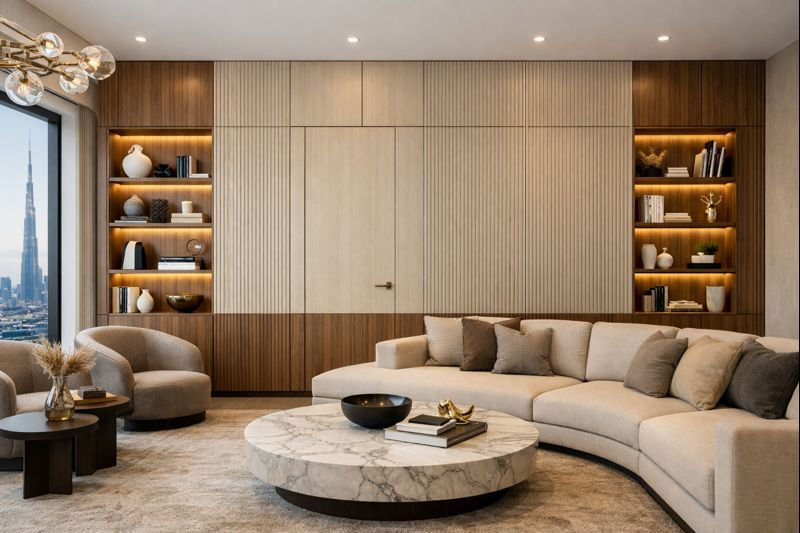
Full-height storage walls, fluted media units, hidden doors, and integrated display niches.
13) Flexible layouts for hybrid work

Homes add compact offices, movable partitions, and multi-use guest rooms with concealed storage.
14) Cultural cues, modern execution

Patterns, mashrabiya-inspired screens, and regional craft references integrated in a contemporary way.
15) Dopamine accents (controlled color, not chaos)

A calm base with one or two high-saturation accents (art, chair, rug) for energy without clutter.
16) Heritage revival details (modernized)

Traditional motifs and classic materials return (woods, leathers, brass), but edited into contemporary forms.
17) Theatrical interiors (atmosphere-first rooms)

More dramatic compositions: layered palettes, rich fabrics, and lighting that creates a “scene.”
18) Conversation pits and sunken seating (selectively)

A comeback in larger villas and penthouses—requires structural and MEP planning early.
19) Painted ceilings and bolder “upper planes”

Ceiling design continues to matter (coffers, color, lighting recesses) to add character without crowding the floor plan.
20) “6th wall” thinking: expressive floors

Patterned floors (painted look, tile geometry, or statement rugs) are used to define zones in open plans.
21) Sustainability as specification (not marketing)

Low-VOC finishes, longer-life materials, repairable surfaces, and responsible sourcing are being requested more often in premium fit-outs.
22) Humidity-ready kitchens and durable materials

Cabinetry finishes, adhesives, and hardware selections prioritize longevity; ventilation is designed to be less visually intrusive.
23) Touchless and sensor-led kitchen details
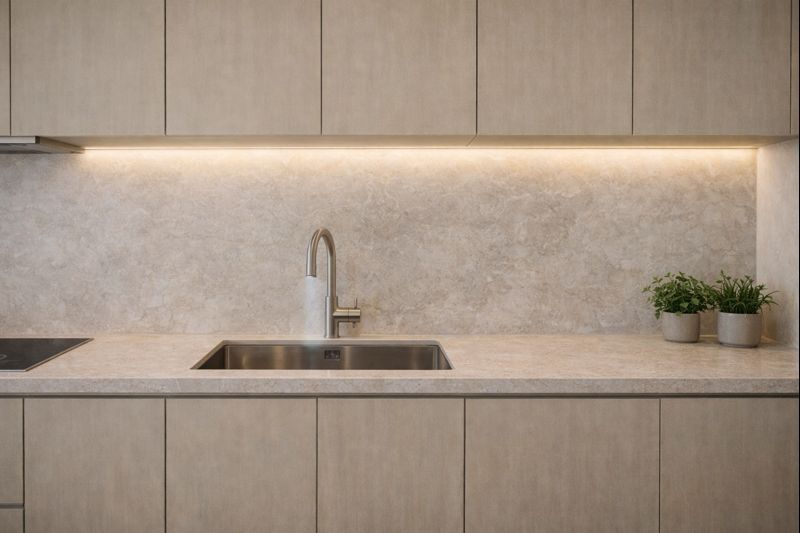
Touchless faucets, smart appliances, and automated storage features show up more in renovation scopes.
24) Spa bathrooms: large-format slabs + soft lighting

Bigger tiles or slab looks reduce grout lines; lighting shifts warmer and more layered for comfort.
25) Seamless indoor–outdoor living (terraces as rooms)

Balconies and terraces are treated as full rooms with outdoor-grade joinery, shaded seating, and integrated lighting.
26) Precision execution and coordinated trades (fit-out maturity)

Higher-end results rely on coordination: joinery tolerances, MEP alignment, lighting integration, and FF&E scheduling—this is where a capable interior contracting company in dubai and disciplined interior contractors dubai matter most.
Why Execution Matters More Than Design Trends in Dubai Dubai interiors demand more than visual appeal. Climate conditions, building regulations, material performance, and coordination between trades directly affect outcomes. This is why working with a professional interior renovation company is essential—not optional.
Cover points:
Joinery tolerances
MEP and lighting coordination
Smart system planning
Material longevity in heat and humidity
Choosing the Right Interior Renovation Partner in Dubai
Explain what clients should look for:
In-house project management
Fit-out experience
Quality control systems
Post-handover support
Interior Design in Dubai Is About Longevity
Wrap up with:
Trend adoption should be selective
Execution defines value
Good design ages well when built correctly
Planning an interior renovation in Dubai for 2026?
Work with an experienced interior contracting company in Dubai like Yalla Renovations that understands design, execution, and long-term performance.


